
Finding a job in the United States as an international professional is a marathon, not a sprint. With the shifts in policy and the economy as we enter 2026, the challenge isn’t just about having the right skills , it’s about finding the right partners and platforms that understand the increasing complexities of sponsorship.
In this guide, we dive deep into the world of U.S. visa Jobs and how platforms like Visa Beyond are revolutionizing the way global talent connects with American opportunity.
n the rapidly shifting landscape of 2026, navigating the complexities of U.S. immigration requires more than just filling out forms—it requires a strategic partner. Visa Beyond is a premier visa agency dedicated to bridging the gap between global talent and American opportunity. Specializing in high-impact pathways like the O-1 Extraordinary Ability visa and the EB-2 National Interest Waiver (NIW), Visa Beyond provides end-to-end support for professionals, entrepreneurs, and researchers.
What sets Visa Beyond apart in 2026 is its “tech-first” approach to immigration. The agency offers a comprehensive ecosystem that includes free profile evaluations, expert attorney matching, and a unique Money-Back Guarantee for qualified cases. Their team deeply understands the nuances of the tech and science sectors, helping candidates build robust petitions that highlight their unique value to the U.S. national interest.
Whether you are looking to bypass the H-1B lottery through self-petitioning or seeking a streamlined corporate transfer, Visa Beyond simplifies the journey. By combining legal expertise with personalized strategy, they ensure that your application meets the rigorous vetting standards of the modern era, turning the dream of living and working in the U.S. into a reality.

The 2026 Landscape for U.S. Visa Jobs
As we move into 2026, the U.S. labor market is defined by a paradox: a high demand for specialized talent in critical sectors like AI, green energy, and healthcare, set against a backdrop of stricter vetting and higher sponsorship costs.
Current trends for 2026 indicate that the “standard” path of applying to thousands of random LinkedIn postings is increasingly a recipe for burnout. Successful candidates are those who target visa-friendly employers from day one.
Why Targeting “Visa-Friendly” Matters in 2026
Applying for a role that doesn’t offer sponsorship is a waste of your time. By focusing specifically on U.S. visa Jobs, you ensure:
- Financial Preparedness: In 2026, new integrity fees and increased H-1B costs mean only committed employers are in the game.
- Vetting Speed: Visa-friendly companies already have the legal “infrastructure” to handle the enhanced social media and online presence vetting now required for H-1B applicants.
- Audit Readiness: Employers on specialized boards are more likely to pass the rigorous wage and workplace inspections that have become common in 2026.

Before you start your search on Visa Beyond, you must understand your category. Each visa has a different bar for entry and a different timeline.
Key Visa Categories for 2026
| Visa Type | Best For… | 2026 Update |
| H-1B | Specialty Occupations | Higher entry fees ($100k for some) and “Extreme Vetting” protocols. |
| EB-2 NIW | National Interest Waiver | surging in popularity as a self-petition path (no employer needed). |
| O-1 | Extraordinary Talent | Still the “gold standard” for those with high professional recognition. |
| TN / E-3 | Professional (MX/CA/AU) | Remains the fastest path for citizens of treaty countries. |
| L-1A/B | Corporate Transfers | Best for managers at multinational firms moving to U.S. branches. |
How Visa Beyond and Workbeyond Change the Game
Traditional job boards are generalist tools. Visa Beyond and Workbeyond are specialist ecosystems designed for the immigrant journey.
1. The Workbeyond Strategy
Workbeyond acts as a centralized hub for roles that explicitly mention sponsorship. In 2026, their database highlights vacancies in sectors that are still hiring aggressively despite broader economic shifts:
- Healthcare & Nursing: Driven by an aging population and clinical shortages.
- AI & Machine Learning: Specialized engineering roles that pair AI fluency with security.
- Clean Energy: Massive infrastructure projects across the U.S. requiring engineers and project managers.
2. Personalized Immigration Strategy
Beyond just finding a job, Visa Beyond offers a “Beyond Border” service. This is vital in 2026 as the H-1B lottery remains extremely competitive (odds are often below 30%).
The platform specializes in the EB-2 NIW path, allowing experts in STEM, business, and education to bypass the employer sponsorship requirement entirely by proving their work is in the “U.S. National Interest.”
3. “Beyond Border” Advantage
- Free Profile Evaluations: To see if you actually qualify for high-tier visas before you spend money.
- Vetting Preparation: Assistance in organizing your “online presence” to meet new 2026 DHS transparency requirements.
- Money-Back Guarantee: Many services offer protections to ensure your investment in your future is secure.
As we move into 2026, many American businesses—particularly in landscaping, hospitality, and agriculture—are actively seeking cost-effective ways to supplement their workforce. The most popular pathways for these seasonal roles are the H-2A and H-2B programs. These specific U.S. Visa Jobs allow employers to bring in international workers to fill labor gaps that cannot be met by the local domestic market.
Understanding the H-2 Pathway
The H-2A visa is designed for temporary agricultural work, while the H-2B visa covers non-agricultural roles such as housekeeping, construction, and seafood processing. For many candidates, securing U.S. Visa Jobs in these sectors is a gateway to earning a competitive wage while gaining international experience. In 2026, the demand for these roles has surged, with the Department of Labor emphasizing strict compliance with prevailing wage standards to ensure both foreign and local workers are treated fairly.
Why Strategy is Key for 2026
Finding these U.S. Visa Jobs requires early planning. For the summer 2026 season, the “lottery” system remains the primary hurdle for H-2B applicants. Employers must prove that their need is truly seasonal or intermittent. By utilizing specialized platforms like Visa Beyond, workers can connect with vetted employers who have already cleared the labor certification process.
Securing U.S. Visa Jobs in 2026 is no longer just about manual labor; it’s about navigating a digital recruitment landscape where compliance and timing are everything. Agencies now play a vital role in matching “petition-ready” workers with businesses that have seasonal peaks. Whether it’s harvesting crops in the Midwest or staffing resorts in Florida, the opportunities for U.S. Visa Jobs remain a vital pillar of the American economy.

Agriculture and farming jobs in U.S.
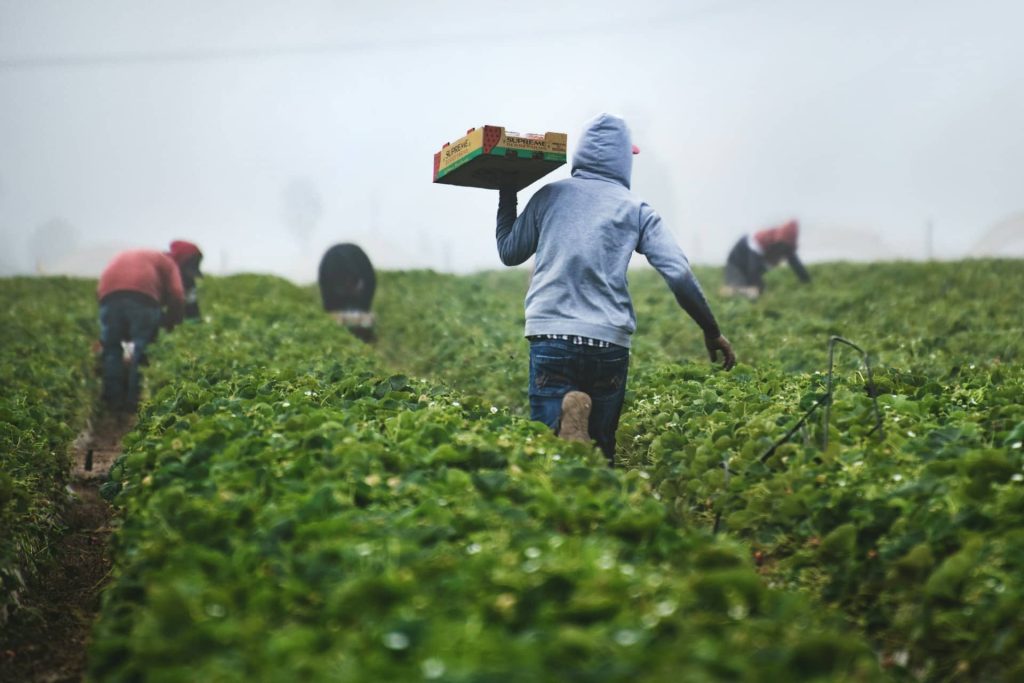
In 2026, the demand for agricultural labor in the United States has reached a critical peak, driven by a combination of technological advancements and a persistent domestic labor shortage. For international workers, agriculture and farming jobs in U.S. markets represent one of the most accessible pathways to legal employment through the H-2A visa program.
The 2026 Landscape for Agricultural Labor
The U.S. agricultural sector is currently facing significant pressure due to rising production costs and a tightening labor market. Reports indicate that over 50% of farms are experiencing labor shortages, leading to unharvested crops in key regions like California and New Jersey. As a result, agriculture and farming jobs in U.S. regions have become a top priority for federal support, with new “bridge payments” and revised wage rules intended to keep the supply chain stable.
Top States for Sponsorship
If you are looking for agriculture and farming jobs in U.S. states, your best bets remain the high-output hubs:
- California: Leads the nation in fruit, nut, and vegetable production.
- Washington: A primary destination for apple and berry harvesting.
- Florida: Critical for citrus and winter produce.
- Arizona (Yuma): Known as the “Winter Lettuce Capital,” offering thousands of roles in the desert Southwest.
The H-2A visa remains the primary vehicle for filling agriculture and farming jobs in U.S.. For 2026, the Department of Labor has introduced “Extreme Vetting” protocols, requiring more transparency from recruiters and employers. Key requirements for workers include:
- Job Offer: You must have a valid offer from a U.S. employer who has proven they cannot find local workers.
- Housing & Transport: By law, your employer must provide safe housing and daily transportation to the job site at no cost to you.
- Meal Guarantees: Employers must either provide three meals a day or provide kitchen facilities for you to cook.

Future Trends: Technology and Labor
While automation is growing, the human element remains irreplaceable for delicate tasks like berry picking and livestock care. Many agriculture and farming jobs in U.S. are now being “retrofitted” with technology, where workers are trained to operate autonomous tractors or use AI-driven health monitoring for livestock.
In summary, the 2026 season offers a wealth of opportunities for those ready to navigate the specialized recruitment landscape. By focusing on high-demand states and understanding your rights under the H-2A program, you can secure stable, legal work in the heart of the American food system.
5 Expert Tips to Secure a U.S. Visa Job in 2026
Tip 1: The “National Interest” Pivot
If you have a Master’s degree or 5+ years of experience, don’t just search for U.S. visa Jobs. Look into self-petitioning for the EB-2 NIW. This makes you a “free agent”—employers are much more likely to hire you if you already have the paperwork started or don’t require them to pay for your Green Card.
Tip 2: Focus on “Cap-Exempt” Employers
Universities, non-profit research organizations, and government entities are “cap-exempt.” This means they can file for your H-1B at any time of year, and you don’t have to wait for the March lottery.
Tip 3: Master “Agentic” Resume Writing
In 2026, AI-driven recruitment is the norm. Your resume must not only be human-readable but also “tokenized” for AI agents.
- Focus on Keywords: “AI Governance,” “Sustainability Compliance,” and “Cybersecurity Risk.”
- Quantify Everything: “Managed a $2M budget,” or “Reduced operational downtime by 15%.”
Tip 4: Be Ready for “Extreme Vetting”
Starting in 2026, the U.S. government has centralized vetting. Ensure your LinkedIn and professional social media profiles are updated, professional, and consistent with your resume.
Tip 5: Target the “Fab” and “Hub” Cities
While NYC and SF are popular, 2026 is the year of the “Semiconductor Fabs” and “Clean Energy Hubs.” Look for roles in Texas, Ohio, and Arizona, where massive federal investment is creating thousands of new U.S. visa Jobs.
Visa Classes For Job Application
To work in the United States, you must hold a visa that specifically grants employment authorization. These are broadly categorized into Temporary (Non-immigrant) and Permanent (Immigrant/Green Card) visas.
As we move into 2026, here is the comprehensive breakdown of the visa classes that support jobs in the U.S.
1. Temporary (Non-Immigrant) Work Visas
These are for a fixed duration and typically require a U.S. employer to sponsor you.
Specialized & General Work
- H-1B (Specialty Occupations): The most common visa for professionals (IT, Engineering, Finance).Requires a Bachelor’s degree.5 It is subject to an annual lottery.
- H-1B1: A specific version of the H-1B for citizens of Chile and Singapore.
- H-2A / H-2B: For temporary agricultural (H-2A) or seasonal non-agricultural (H-2B) labor.
- H-3 (Trainee): For receiving professional training in the U.S. that is not available in your home country.
Corporate & Extraordinary Talent
- L-1A / L-1B (Intracompany Transferees): For managers, executives, or specialized knowledge workers transferring from a foreign office to a U.S. branch of the same company.
- O-1 (Extraordinary Ability): For individuals with “extraordinary ability” in science, art, education, business, or athletics. This is a powerful alternative to the H-1B lottery.
Nationality-Specific Visas
- TN (USMCA): Professional visa for citizens of Canada and Mexico (e.g., accountants, engineers, pharmacists).
- E-3: Specifically for Australian specialty occupation professionals.13
- E-1 / E-2: For treaty traders and investors from countries that have a qualifying treaty with the U.S.
2. Permanent (Immigrant) Visas – The “Green Card”
These allow you to live and work in the U.S. permanently. They are categorized by “Preference.”14
- EB-1 (Priority Workers): For extraordinary researchers, professors, and multinational executives.15 No “Labor Certification” (PERM) is required.
- EB-2 (Advanced Degree/Exceptional Ability): For professionals with a Master’s/PhD or 5+ years of experience.
- National Interest Waiver (NIW): A sub-category of EB-2 where you can sponsor yourself if your work benefits the U.S.
- EB-3 (Skilled/Professional/Other Workers): For Bachelor’s degree holders, skilled workers (2+ years experience), and even some unskilled labor.
- EB-4 (Special Immigrants): Includes religious workers and certain former government employees.16
- EB-5 (Investors): For those investing significant capital ($800k+) into U.S. job-creating enterprises.
3. Student & Exchange Work Authorization
- F-1 (OPT/CPT): International students can work via Optional Practical Training (12–36 months depending on STEM status) or Curricular Practical Training during their studies.17
- J-1 (Exchange Visitor): For scholars, professors, and au pairs. Some J-1 categories allow for temporary employment.
Comparison of Key Work Visas for 2026
| Visa Class | Duration | Key Requirement | Employer Needed? |
| H-1B | 3–6 Years | Bachelor’s Degree | Yes |
| L-1 | 5–7 Years | 1 Year at Foreign Office | Yes |
| O-1 | Initial 3 Years | National/Intl. Acclaim | Yes (or Agent) |
| EB-2 NIW | Permanent | Advanced Degree + National Merit | No |
| TN | 3 Years (Renewable) | Canadian/Mexican Citizenship | Yes |
FAQ
As we move into 2026, the rules for U.S. immigration have become more data-driven and rigorous. Whether you are a tech professional looking for U.S. visa Jobs or an entrepreneur considering a self-petition, these are the top 10 questions we receive at Visa Beyond.
1. Can I apply for a U.S. work visa without a job offer in 2026?
Yes. Under the EB-2 NIW (National Interest Waiver) and EB-1A categories, highly skilled professionals can “self-petition.” This means you do not need a U.S. employer to sponsor you if you can prove your work has “substantial merit and national importance.”
2. What is the “Social Media Vetting” rule starting in 2026?
Starting January 2026, the U.S. government has expanded its “Extreme Vetting” protocols. H-1B and other work visa applicants must now disclose all social media handles used in the last five years. Consular officers use this to verify employment history and ensure consistency with your petition.
3. How long does the EB-2 NIW process take through Visa Beyond?
While government processing times vary, Visa Beyond typically helps candidates file their I-140 petitions within one month of document collection. With Premium Processing, you can receive a decision from USCIS in as little as 15 to 45 business days.
4. Is the H-1B lottery still the only way for tech workers?
No. Because the H-1B lottery remains highly competitive (with odds often below 25%), many 2026 applicants are pivoting to the O-1 (Extraordinary Ability) visa. Unlike the H-1B, the O-1 has no annual cap and can be applied for at any time.
5. What are the best sectors for U.S. visa Jobs in 2026?
The highest demand for sponsorship is currently in:
- Artificial Intelligence & Cybersecurity
- Renewable Energy & Sustainability Engineering
- Healthcare (especially Specialized Nursing and Bio-tech)
- Semiconductor Manufacturing
6. Does Visa Beyond offer a Money-Back Guarantee?
Yes, for qualified candidates. After a Free Profile Evaluation, if our experts determine you have a strong case for an EB-2 NIW or O-1 visa, we offer a money-back guarantee on our service fees to ensure our interests are aligned with your success.
7. What is the minimum salary required for a U.S. work visa?
In 2026, the Department of Labor has stricter “Prevailing Wage” requirements. Employers must pay the higher of either the local market rate or the actual wage paid to other similar workers. Generally, for H-1B roles, salaries must align with Level 2 or higher to avoid “Request for Evidence” (RFE) notices.
8. Can my spouse work in the U.S. if I get a work visa?
It depends on your visa class:
- H-1B: Spouses (H-4) can only work once the principal holder has an approved I-140 (Green Card petition).
- L-1: Spouses (L-2) are typically granted work authorization “incident to status.”
- E-2 / TN: Specific rules apply; generally, E-2 spouses can work, while TN spouses (TD) cannot.
9. What are “Cap-Exempt” employers?
These are organizations—such as universities, non-profit research institutes, or government entities—that are not subject to the annual H-1B lottery limit. You can start a job with a cap-exempt employer at any time of the year.
10. How do I know if I qualify for “Extraordinary Ability” (O-1)?
You don’t need a Nobel Prize! You must meet at least 3 of 8 criteria, such as:
- Receipt of nationally recognized awards.
- Membership in associations that require outstanding achievements.
- Published material about you in professional journals or major media.
- Commanding a high salary relative to others in your field.

Conclusion: Your Next Step Toward the U.S.
The search for U.S. visa Jobs in 2026 is about being strategic rather than desperate. By using specialized platforms like Visa Beyond, you move away from “hope-based” searching and into a data-driven career move.
The U.S. dream is more selective than ever, but the doors are wide open for those with the right skills and the right strategy.
